
Lead Management System Guide: Track, Score and Convert Every Business Enquiry
Leeds come from your website, Instagram, Google, WhatsApp, and referrals. Without a system to track them, most slip through the cracks. Here is how to build a lead management system that captures, scores, follows up, and converts every single enquiry into revenue.
Why This Matters for Your Business
The real cost of not fixing these issues — and why most businesses get stuck.
Leads disappear when you manage them manually
When enquiries arrive across WhatsApp, Instagram DMs, website forms, phone calls, and walk-ins, the average small business loses 30-50% of them. Names get written on sticky notes, messages go unread, and calls are forgotten. Without a central system, you are not managing leads — you are hoping you do not miss them.
Not all leads are equal, but you treat them that way
A lead asking about your premium service package is fundamentally different from someone casually browsing. Without lead scoring, your team spends equal time on hot buyers and tyre-kickers. A lead management system helps you prioritise — so your best prospects get called first and your time is spent where it converts.
Follow-up is where most lead systems fail
Capturing a lead is step one. Following up until they convert is where the real work happens. Most businesses send one message and give up. A proper lead management system tracks every touchpoint, schedules follow-ups automatically, and ensures no lead goes cold — whether it takes 2 days or 2 months to convert.
Key Insight
Addressing these challenges helps improve lead handling — faster responses and consistent follow-up can capture more enquiries. Actual results depend on traffic quality, sales process, offer strength and implementation scope.
What We Evaluate
Every implementation covers these key areas to ensure nothing is missed.
Lead Source Tracking
Identifies where every lead comes from — website, Instagram, Google, WhatsApp, referral, or walk-in — so you know which channels perform best.
Lead Scoring Model
Evaluates whether you have a system to prioritise leads by intent, budget, timeline, and engagement level.
Follow-Up Cadence
Checks your current follow-up frequency, the number of touchpoints, and whether follow-ups happen automatically or manually.
Pipeline Visibility
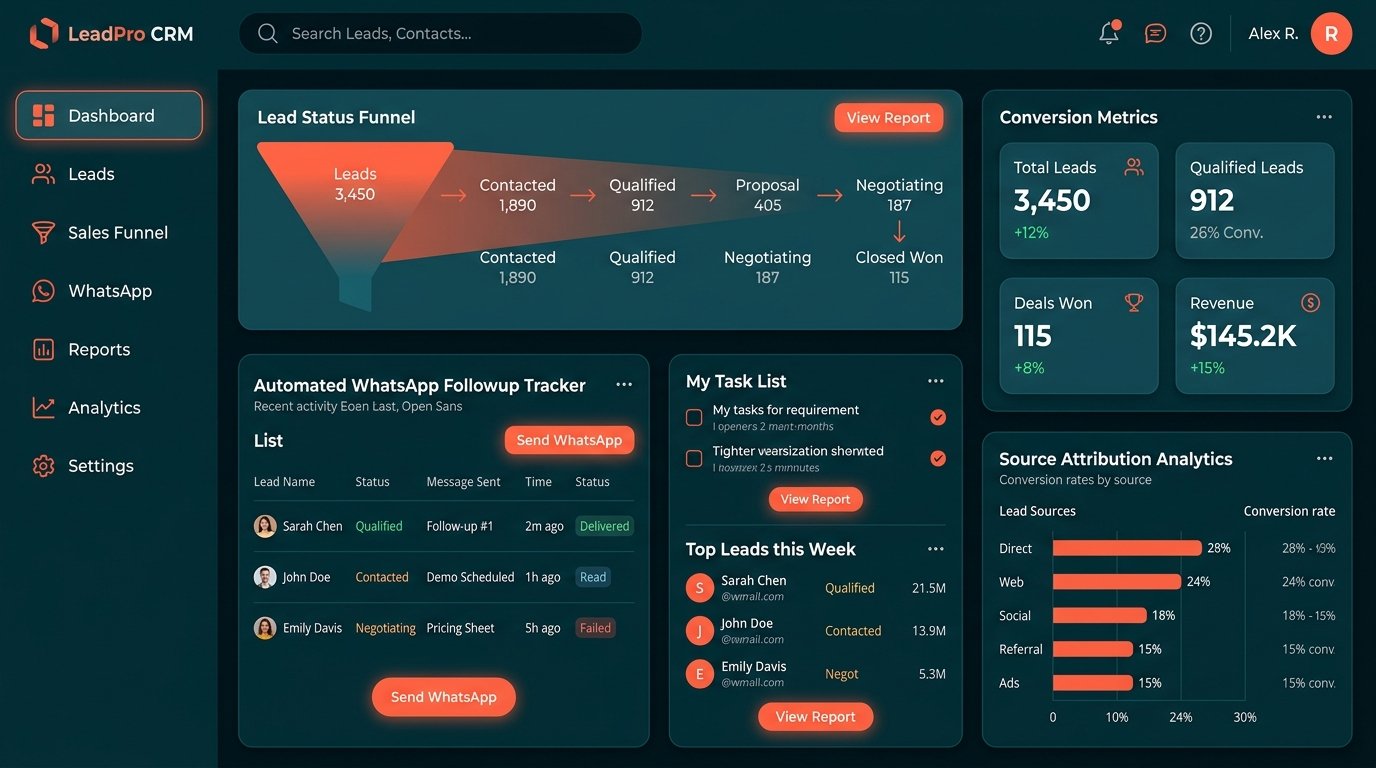
Measures whether your team can see every lead's status — new, contacted, qualified, proposal sent, negotiation, won, lost — at a glance.
Conversion Analytics
Reviews if you track conversion rates at each pipeline stage and know where leads drop off most.
Your Step-by-Step Action Plan
Follow these steps in order. Each one builds on the last.
Real Results, Real Business
See how another business solved the same problems you are facing.
A digital marketing agency recovered 40% of lost leads with a simple lead system
A digital marketing agency in Pune was getting 80+ enquiries per month from their website, Instagram, and referrals. But they had no central system — enquiries were scattered across the founder's WhatsApp, an intern's Google Sheet, and email inboxes. They estimated they were losing 35-40 leads per month. After implementing a lead management system using Zoho CRM: every enquiry was automatically captured from their website form and WhatsApp, leads were scored using BANT criteria, follow-up tasks were auto-assigned to team members, and a 6-step email+WhatsApp sequence nurtured cold leads. Within 3 months, their lead-to-client conversion rate went from 12% to 22%, and they recovered an estimated 28 lost leads that re-engaged through automated follow-ups.
Your Action Plan
Fix things in stages — from immediate wins to advanced automation
Quick Fixes — Today
- Create a central Google Sheet with columns for source, name, contact, status, and follow-up date
- Set up automatic lead capture from your website contact form into the sheet or CRM
- Define 5 pipeline stages and move every existing lead into the correct stage
- Assign one team member as the lead manager responsible for daily triage
Short-Term — 1 Week
- Implement lead scoring — assign 1-10 points based on budget, authority, need, and timeline
- Build a 5-message WhatsApp follow-up sequence for cold leads
- Set up daily or weekly lead review meetings with the team
- Create a lost lead log to track why deals fell through
Growth — 30 Days
- Integrate your CRM with WhatsApp for auto-logging and two-way communication
- Build automated lead assignment rules that route leads to the right salesperson
- Create lead source performance dashboards to track which channels deliver the best ROI
- Implement lead enrichment using publicly available data to add context to each lead
Advanced — 90 Days
- Build an AI-powered lead scoring engine that predicts conversion probability
- Implement multi-channel nurture sequences across WhatsApp, email, SMS, and LinkedIn
- Create predictive analytics models that forecast monthly lead volume and revenue
- Build a customer 360 view that links lead data with post-sale support and retention metrics
Ready to stop losing leads and start tracking every enquiry?
Curve Metrics builds lead management systems that capture enquiries from every channel, score them by priority, and automate follow-ups until they convert. Start with a free consultation to see how many leads your business is currently losing.
Frequently Asked Questions
What is the difference between a lead management system and a CRM?
A lead management system is the process of tracking and following up with leads. A CRM is the software that enables it. Think of lead management as the strategy and CRM as the tool. You can start with a Google Sheet (free) and graduate to a CRM as you grow.
How many pipeline stages should I have?
Start with 5-6 stages: New, Contacted, Qualified, Proposal, Negotiation, and Won/Lost. Too many stages create complexity, too few hide where leads are stuck. Adjust based on your sales cycle length.
How do I score leads without overcomplicating it?
Use the BANT framework — Budget (do they have it?), Authority (can they decide?), Need (do they need what you sell?), Timeline (when do they want it?). Assign 1-5 points for each. Leads with 15+ points get immediate attention.
What is a good lead-to-customer conversion rate?
For B2B service businesses in India, 10-20% is average. For B2C, 20-40% is typical. If you are below 10%, either your lead quality is low or your follow-up process needs improvement.
Should I use free or paid lead management software?
Start free. Google Sheets + Google Apps Script can handle up to 200 leads per month with automatic capture and follow-up tracking. When you exceed 200 leads or need team collaboration, upgrade to Zoho CRM (₹1,200/user/month) or HubSpot (free tier available).
How often should I clean my lead database?
Every 90 days. Remove duplicates, update stale statuses, archive leads that have been cold for 6+ months, and merge duplicate entries. A clean database ensures accurate reporting and efficient follow-up.