
The Operational Friction in Mid-Sized Indian Manufacturing
Mid-sized manufacturing units—such as FIBC container bag factories, textile mills, precision engineering firms, and chemical packaging suppliers in industrial hubs like Nagpur—often struggle with fragmented communication across order entry, job card generation, quality control (QC), and dispatch. Manual data entry from customer Purchase Orders (POs) into spreadsheets creates costly errors in bag specifications, printing matter, and delivery timelines. Curve Metrics builds custom operations CRMs that combine AI PO data extraction with QR-code quality check management.
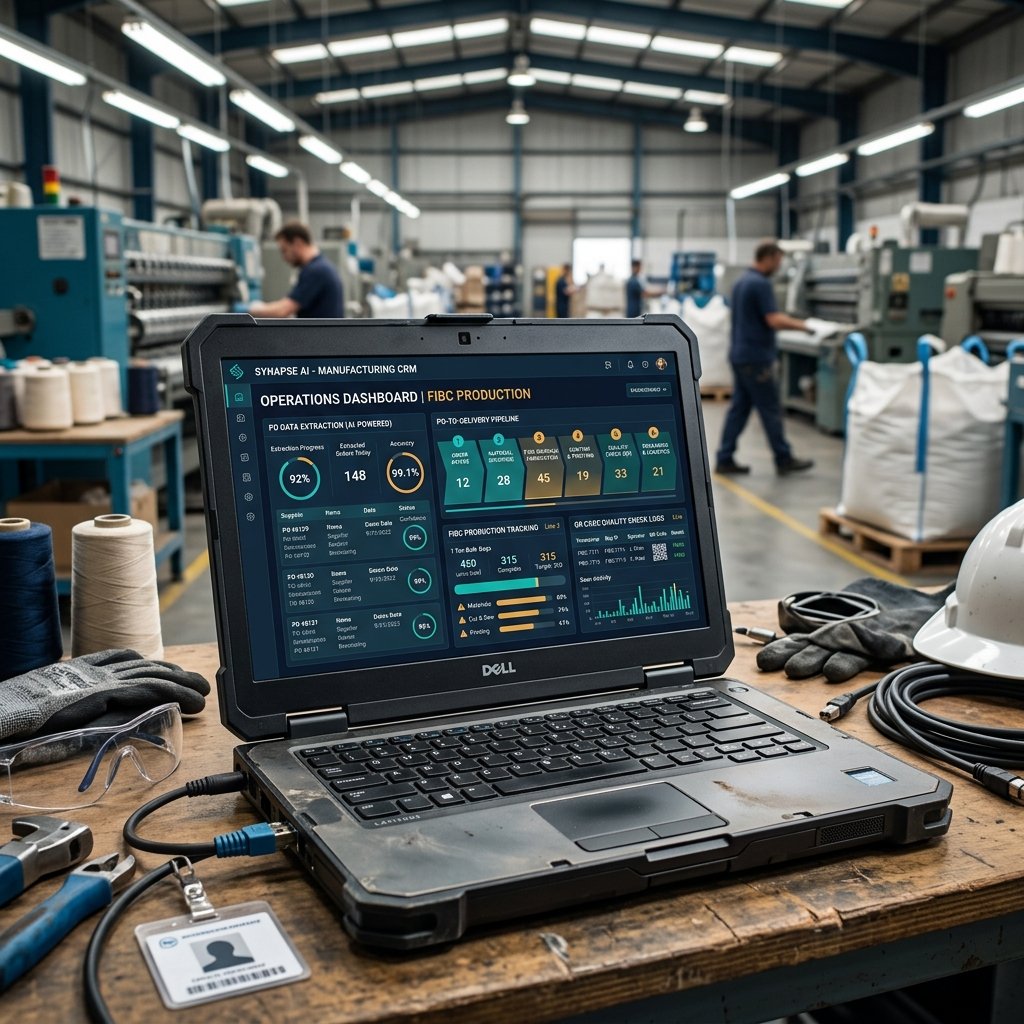
The 6-Stage PO-to-Delivery Manufacturing CRM Pipeline
Stage 1: PO Upload & AI Extraction — PDF/image PO uploaded; AI extracts customer details, SKU specs, delivery dates, and commercial terms. Stage 2: Auto Costing & Job Card Generation — System generates job cards with container composition, fabric specs, and label requirements for manager approval. Stage 3: Production & Stitching Track — Job cards issued to cutting, printing, and sewing lines with batch tracking barcodes. Stage 4: QR-Code Quality Inspection — Inspectors scan QR labels at final air wash & QC stations, logging pass/fail records and defect photos on tablets. Stage 5: Packing & Pallet Barcoding — Completed goods packed into pallets with automated packing lists and dispatch labels. Stage 6: Logistics & Contractor Billing — Dispatch verifications connected to contractor billing for final manager sign-off.
Why QR-Based Quality Control Eliminates Production Defects
By attaching unique QR codes to every job card and production roll, inspection owners log timestamped QC records at critical assembly checkpoints. If a defect is identified during air-washing or seam inspection, the QR system flags the specific stitching line and contractor instantly, preventing defective batches from reaching dispatch and reducing customer return rates to near-zero.